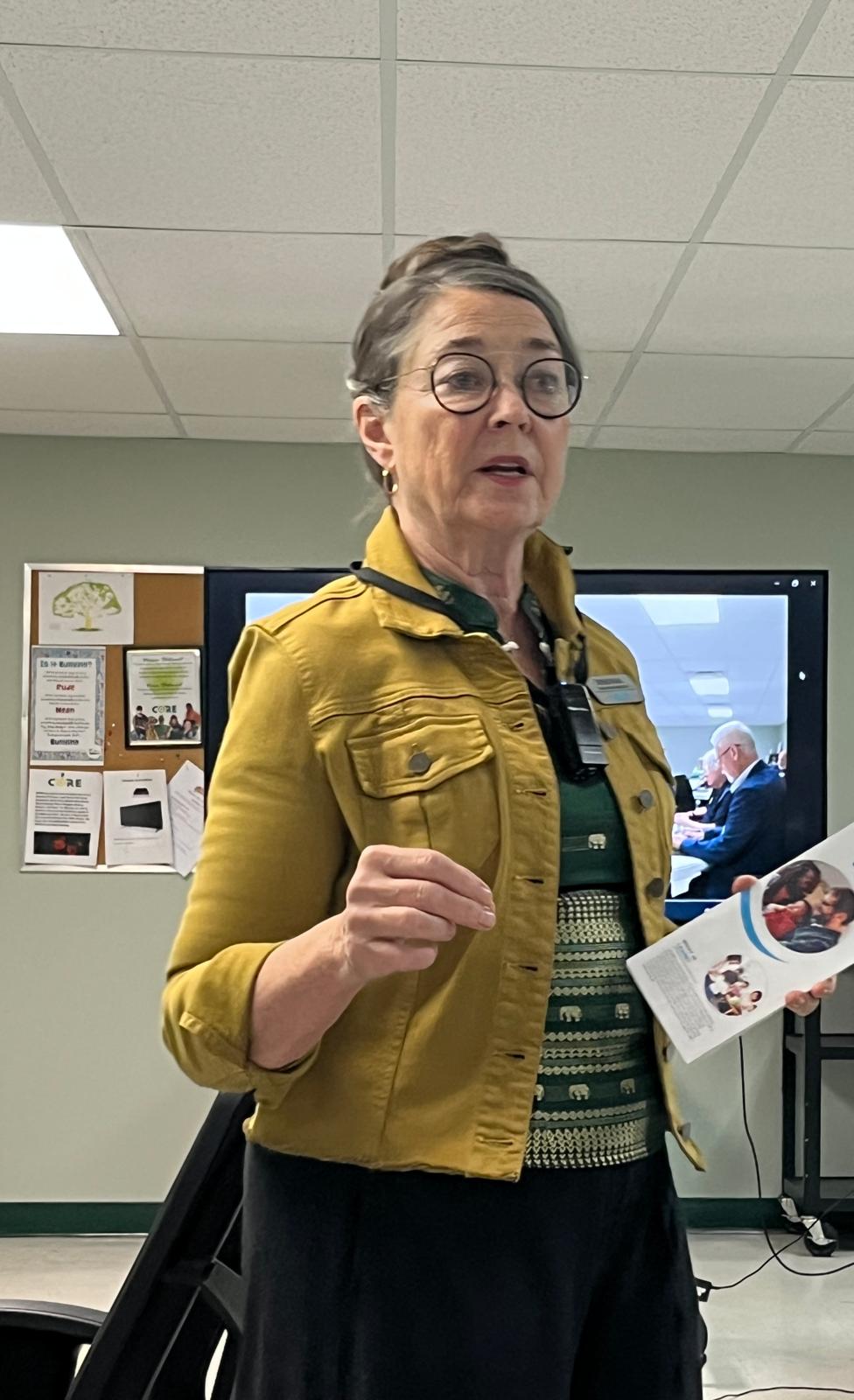
Today we were joined Deborah Forbes who is the Executive Director of LEARN, based out of the Medicine Hat College. Deborah has a PhD and Master of Education degrees and has taught at the college since 1993. In addition to her work with LEARN and MHC, Deborah has been a Public School Board Trustee for the past 30 years, a published academic and artist, creating in a variety of media. She is well travelled around the world and has lived in 5 provinces in Canada as well as Edinburgh, Scotland.
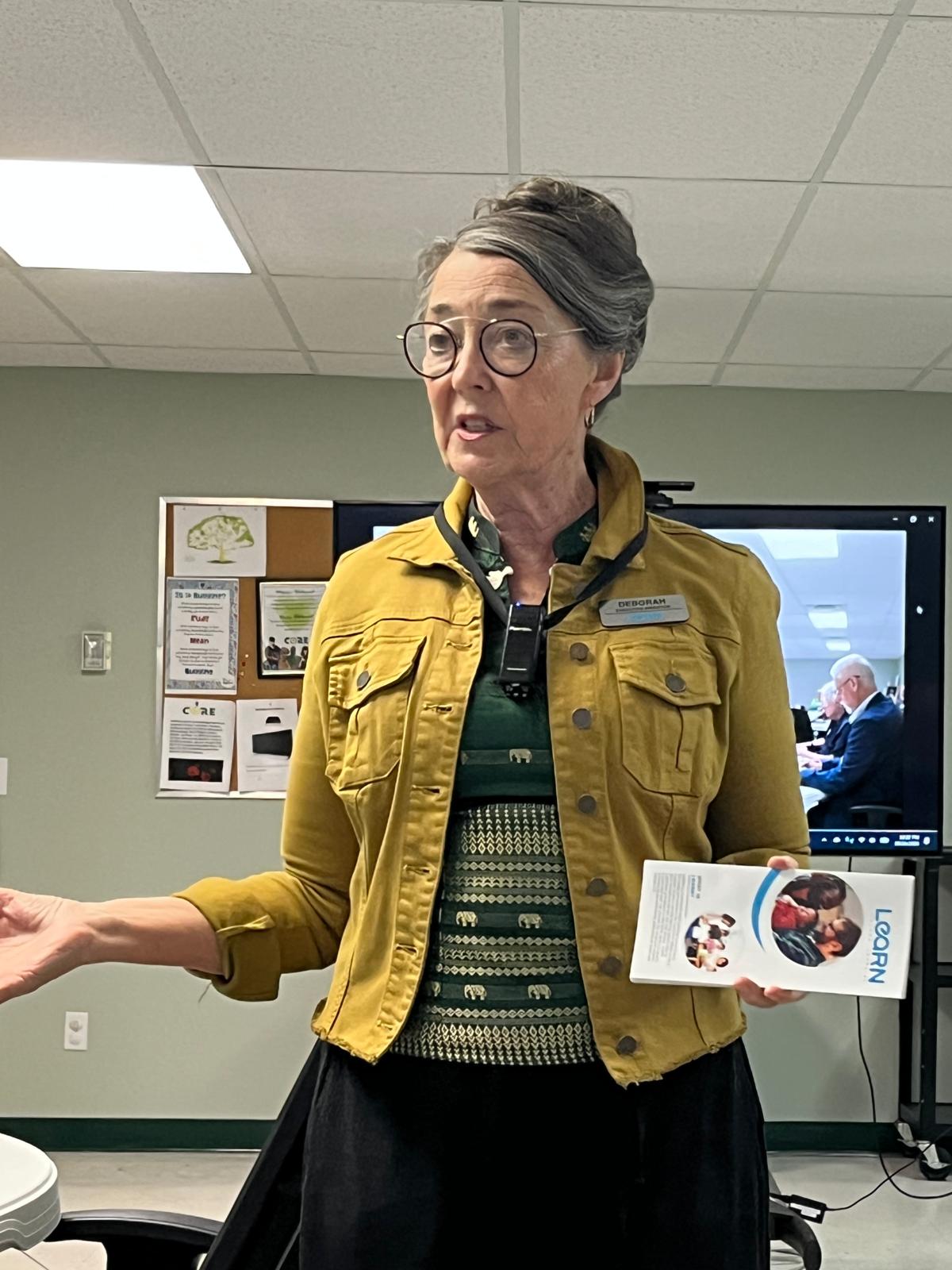
We heard her talk at Pecha Kucha Night Vol. 38, during which Deborah told us about LEARN's Imagination Alive! program, developed for seniors with dementia and high school students to write stories together based on imagination. A new undertaking, also related to story telling, is to talk with unhoused and homeless people to hear their stories and what they perceive as their needs to have food, shelter and safety of being. The idea is that experiencing and listening are key methods to learning about needs and solutions. For example, people with dogs limit availability to things like washrooms, transportation etc but the dogs are a key part of survival for these people. How can life with a canine companion be facilitated for people?
Deborah believes that attempts to help with an authoritarian approach are not generally successful but a collaborative approach will be more successful. She is garnering help from a kookum named Gerldine who feeds those in need in the park and knows most of the unhoused people in Medicine Hat. As well, various relevent programs at the college to interview and talk to people. She hopes that this work will lead to realistic and sustainable supports for the unhoused in the community.
If you want to learn more about the variety of programs, most if not all free, that support learning and literacy, visit LEARN at http://learn-council.ca/